

Water & drainageGuide 6 of 8
Sump pump maintenance: a checklist, a test and how long pumps last
From Below the Sill · belowthesill.com/sump-pumps/maintenance/
Short answer
Check your sump pump every month in the wet season, run water through it a few times a year, and clean and inspect it once a year following the manual for your pump. A test only takes a few minutes: pour water into the pit and make sure the pump kicks on, empties the pit and shuts off. Keep a close eye on a main pump once it’s seven to ten years old. Some fail earlier and some last longer.
On this page
Sump pump maintenance checklist
Every month in the rainy season
- The alarm works.
- No unusual water in the pit.
- The float has room to move.
- The water is discharging outside, away from the house.
- No leaks or new noises.
- After a big storm, look again.
Every three months
- Test the pump with water, if the manual allows it.
- Look over the check valve, the lid, the visible pipe and the discharge outside.
- Test the backup pump and check the battery, following the manufacturer.
Once a year
- Clean and check the whole system following the manual.
- Have a technician check the pump’s operation if needed.
- Test the main pump and the backup.
- Check the connections.
- Write down the pump’s age and any changes in how it runs.
Adjust the schedule to how often your pump runs. Some manuals call for one or two specific maintenance checks a year. This checklist doesn’t replace the manual for your pump.
Printable checklist
Sump pump maintenance
A month-by-month schedule, a quick test and a log for the main pump and the backup. One page, US Letter.
Printable checklist: Sump pump maintenance. Download the one-page PDF at belowthesill.com/checklists/sump-pump-maintenance-checklist.pdf
How to test a sump pump
- Make sure it’s safe. If a cord is damaged or there’s water around outlets or wiring, don’t test it. Call a professional.
- Find where it discharges outside and check that the outlet isn’t blocked.
- Look at the lid, the float and the pit without putting your hands in the pit or touching anything that’s powered.
- Pour clean water into the pit until the float rises enough to start the pump, if the manufacturer allows it.
- Watch it work. It should start, push water out the discharge, lower the level and shut off on its own, without running dry for long.
- Listen for a banging check valve, vibration or the pump starting and stopping over and over.
- Test the backup and the alarms following the instructions for your system, then put every switch back where it was.
- Write down the date and anything odd. If the pump doesn’t start or doesn’t empty the pit, call a technician.
InterNACHI gives the same core test: pour water into the pit, confirm the pump turns on and empties it, and never reach into the pit.
Cleaning the pit, the inlet screen and the check valve
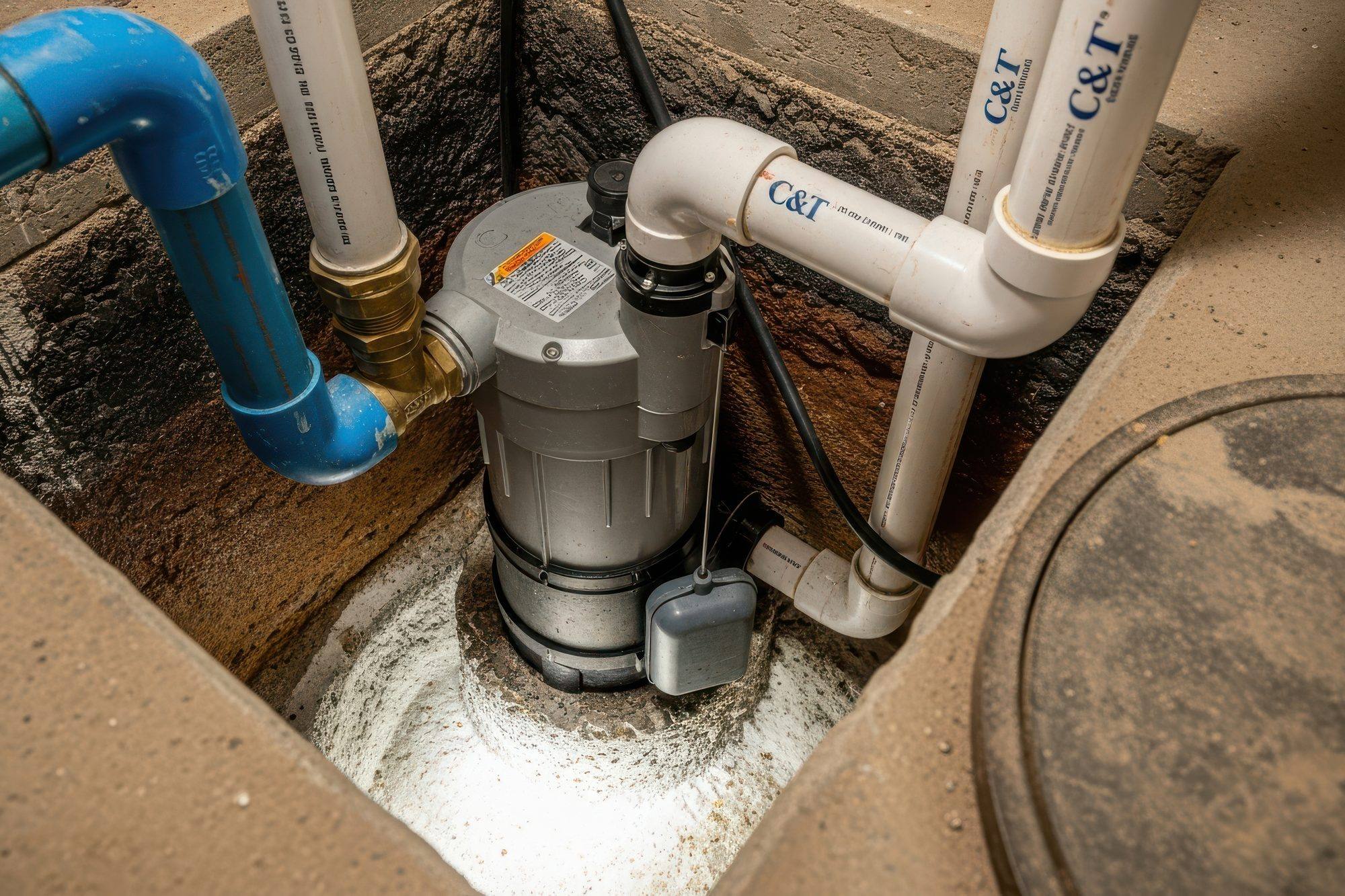
Dirt and debris build up in the pit and can plug the pump’s inlet screen or hang up the float. If the float catches on its cord or a pipe, the pump won’t turn on when the water rises. Clean out the pit and the screen once a year, with the power off and following the manual. The check valve keeps water in the discharge line from draining back into the pit. If it fails open, the pump runs more than it should.
The discharge line, inside and out
Trace the discharge line from the pump to where it ends outside. It should send water away from the house, to a spot your town allows, where it won’t freeze in winter. If it ends right at the wall, you’re just pumping the water back toward the house. Our guide to where sump pump water should go covers the rules and options.
What fails when a pump isn’t maintained
- A float jammed by its cord or by debris.
- A clogged inlet.
- Sediment built up in the pit.
- A check valve that lets water back in.
- A frozen discharge line that wasn’t laid out right.
- A dead or disconnected backup battery.
- Corroded connections.
- A pump that short-cycles, starting and stopping again and again.
Some of these are design problems, not maintenance: a pit that’s too small, or a discharge line that’s too short. Those need changes, not just cleaning. If the pump has already stopped, our sump pump troubleshooting guide goes symptom by symptom.
How long a sump pump lasts
I plan on about seven to ten years for a main pump, but I can’t promise how long yours will last. A pump can fail early if it runs a lot, it’s undersized, it short-cycles, there are solids in the pit or the voltage is bad. It can also last longer. The backup and its battery have their own life spans.
When to replace it
If the pump makes a new noise, starts at random, moves less water or shows corrosion, or if it’s getting old and your house tends to flood, I’d budget for a new pump before the next rainy season instead of waiting for it to fail. See sump pump cost for what that runs.
Who wrote this guide
Written by
Licensed contractor in Virginia who specializes in moisture, water, mold and radon.
- Five IICRC certifications, including Building Moisture Inspection and Mold Remediation Specialist
- Virginia contractor license, Residential Building Contractor (RBC) class
- NRPP certified Radon Measurement Professional (2018) and Radon Mitigation Specialist (2020)
- EPA RRP Certified Renovator (lead-safe renovation)
Below the Sill is independent and educational. We don’t provide inspections, engineering or repair services, contractor referrals or estimates.
Share this guide
All 8 guides in Water & drainage
Water & drainage topic page- 01Yard grading
- 02Downspouts
- 03French drains
- 04Sump pumps
- 05Pump troubleshooting
- 06Sump pump maintenance (you’re here)
- 07Backup and alarms
- 08Sump pump cost
A seasonal check, by email
Four emails a year, before each season changes: what to look at in your basement, crawl space and yard, and the guides we’ve published since the last one.
Sources
- InterNACHI, Sump Pump Operation and Inspection Guide (opens in a new tab). Checked October 2026.
Field cases come from Robert Stulpt’s own work; each names only the state. Follow your pump’s manual first. Below the Sill doesn’t sell pumps or send customers to anyone.