

Home hazardsGuide 8 of 8
Asbestos floor tiles and black mastic: test, cover or remove?
From Below the Sill · belowthesill.com/asbestos/floor-tiles/
Short answer
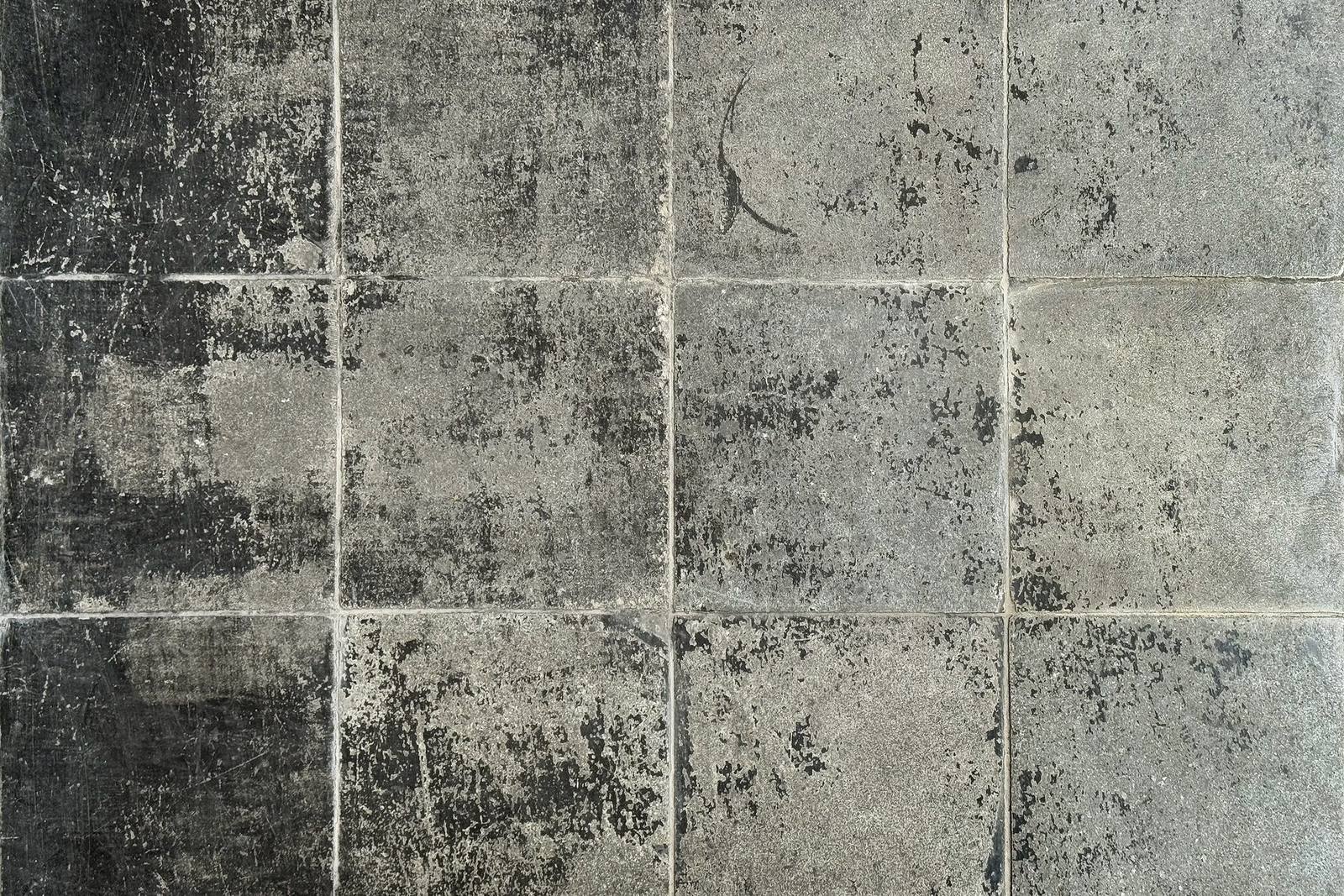
Old vinyl or asphalt floor tiles, especially 9 x 9 in tiles, and the black adhesive that holds them down (mastic) can contain asbestos. You can’t tell by size or color: samples of the tile and the mastic have to be tested separately at a lab. If the floor is in good shape and well stuck down, the EPA suggests installing new flooring over it when possible. Removal is a job for a trained, accredited professional and often costs $4 to $15 per square foot (HomeGuide, 2026). Never sand, grind or dry-scrape it.
On this page
- How to tell if floor tiles might contain asbestos
- 9 x 9 tiles, black mastic and other clues
- Is it safe to leave them in place?
- Covering asbestos tiles in a basement
- Testing tiles and mastic
- Asbestos floor tile removal: what's involved and what it costs
- Mistakes homeowners make
- Rules that apply where you live
How to tell if floor tiles might contain asbestos
In mid-century houses, old floor tiles are one of the first things our asbestos contributor, Graham Whitlock, looks for when someone plans to pull up a basement floor. He often finds 9 x 9 in tiles under carpet, laminate or other flooring, many of them with black mastic.
What he looks at:
- The approximate age of the house and of the floor.
- How many layers there are.
- Broken or brittle edges and missing pieces.
- How well the floor is stuck down.
- What the owner plans to do: sand it, level it, cover it or tear it out.
None of these is proof. Asbestos also turns up in tiles of other sizes, and in layers under the top floor.
9 x 9 tiles, black mastic and other clues
A 9 x 9 in tile and black mastic can be signs of asbestos, but they aren’t proof. Graham warns against two opposite mistakes: assuming the tiles contain asbestos because the mastic is black, and assuming they’re safe because they’re a different size.
When the job calls for it, he has the tile and the mastic sampled separately: the tile can be positive and the mastic negative, or the other way around. If the owner is about to sand, grind or tear the floor out dry, he stops that part of the work until the materials are identified.
Is it safe to leave them in place?
As long as asbestos floor tile isn’t broken, sanded, ground or scraped, it gives off little or nothing. Once it’s disturbed, it can release fibers. The EPA’s advice for homeowners: don’t sand or try to level asbestos flooring or its backing, never use a power stripper on flooring that may contain asbestos, and when asbestos flooring needs replacing, install new floor covering over it if possible.
IfThe tiles are intact, well stuck down, and you aren’t changing the floor
ThenLeave them alone. Intact tile gives off little or nothing. Make a note of where it is.
IfThe tiles are intact and you want a new floor
ThenCover them, if you can. The EPA suggests new floor covering over old asbestos flooring when possible. Check the slab for moisture first, and keep a record of what’s underneath.
IfTiles are broken, loose or crumbling
ThenHave the tile and the mastic sampled separately. A trained, accredited professional takes the samples. If the lab finds asbestos, the damaged area is repaired or removed by a qualified crew.
IfYou plan to sand, grind, level, scrape or tear out the floor, or the slab has to be cut
ThenStop and test first. If either layer contains asbestos, removal goes to a trained, accredited contractor, with wet methods and no abrasive machines.
Covering asbestos tiles in a basement
If the tile is in good condition and well stuck down, Graham prefers to cover it, as long as the slab doesn’t have to be opened, the new flooring works over it and there’s no moisture problem. Before he approves a floating floor, he checks the slab’s condition and moisture.
Covering the tile won’t solve water seeping up through the slab, and it doesn’t remove the asbestos. Keep a note of what’s under your new floor and tell any contractor before they cut into it.
Our guide to basement finishing covers subfloors and flooring that tolerate a basement.
Testing tiles and mastic
The EPA recommends that a trained and accredited professional take the samples, not the homeowner. National prices from HomeGuide:
| Service | Typical cost |
|---|---|
| Lab test per sample | $20–$80 |
| Inspection with sampling, lab test and report | $250–$850 |
| Whole-home asbestos inspection | $1,200–$2,000+ |
| DIY test kit | $50–$250 |
Ask for the tile and the mastic to be sampled and reported separately, and for an accredited lab. See asbestos in the basement for how labs are accredited.
Asbestos floor tile removal: what’s involved and what it costs
Graham calls for professional removal when many tiles are broken or loose, when the slab has to be opened, or when the new flooring requires taking out the old layers.
Taking up the tiles doesn’t mean you’re done with the mastic. Graham treats the adhesive as a separate layer of flooring. If it’s in good condition and the new flooring allows it, it can stay in place, covered. If it has to come up, a contractor who specializes in that material removes it, with methods suited to the job. No sanding, dry scraping, abrasive machines or improvised solvents that can spread fibers. OSHA’s asbestos standard has specific rules for flooring and mastic removal, including wet methods and limits on abrasion.
HomeGuide puts asbestos flooring removal at $4 to $15 per square foot and encapsulation at $2 to $6 per square foot. Small areas can get expensive because of the fixed costs of setting up, containment and disposal. A clear quote lists the license, the lab work, permits and the new flooring as separate lines.
Mistakes homeowners make
- Sanding the floor “to even it out.”
- Pulling tiles up dry.
- Scraping the adhesive with a machine.
- Sweeping up the debris or using a household vacuum.
- Assuming black adhesive means asbestos, or that a different tile size means none.
- Covering the floor without solving water coming up through the slab.
- Burying the test results under the new floor without telling future contractors.
Rules that apply where you live
Asbestos rules for houses vary by state and town. In Pennsylvania, for example, the Department of Environmental Protection doesn’t regulate removal from private homes with fewer than five units, but other state and local rules can still apply. Maryland regulates friable asbestos in single-family homes during renovation and demolition, except when homeowners do the work themselves. Our guide to asbestos in the basement sums up the federal rules and those in Virginia, Maryland, Pennsylvania and North Carolina.
Asbestos information reviewed for technical accuracy by Graham Whitlock. This content is educational and is not a substitute for an inspection and lab testing by an accredited asbestos professional in your state.
Who wrote this guide
Written by
Licensed contractor in Virginia who specializes in moisture, water, mold and radon.
- Five IICRC certifications, including Building Moisture Inspection and Mold Remediation Specialist
- Virginia contractor license, Residential Building Contractor (RBC) class
- NRPP certified Radon Measurement Professional (2018) and Radon Mitigation Specialist (2020)
- EPA RRP Certified Renovator (lead-safe renovation)
Asbestos review
Graham Whitlock, Asbestos & Environmental Safety Contributor
Reviews the asbestos information in this guide for technical accuracy.
- Licensed Asbestos Inspector and Asbestos Project Monitor, Virginia DPOR
- Asbestos inspector accreditation in Maryland and Pennsylvania
- B.S. in Environmental Science, Virginia Tech; 22 years in asbestos inspection and project oversight
Below the Sill is independent and educational. We don’t provide inspections, engineering or repair services, contractor referrals or estimates.
Share this guide
All 8 guides in Home hazards
Home hazards topic pageA seasonal check, by email
Four emails a year, before each season changes: what to look at in your basement, crawl space and yard, and the guides we’ve published since the last one.
Sources
- U.S. EPA, Protect Your Family from Exposures to Asbestos (opens in a new tab) (updated June 25, 2026). Checked October 2026.
- OSHA, Asbestos standard for construction, 29 CFR 1926.1101 (opens in a new tab). Checked October 2026.
- HomeGuide, Asbestos Testing and Inspection Cost (opens in a new tab) (2026 edition). Checked October 2026.
- HomeGuide, Asbestos Removal Cost (opens in a new tab) (2026 edition). Checked October 2026.
- Pennsylvania DEP, Asbestos (opens in a new tab). Checked October 2026.
- Maryland Department of the Environment, Asbestos for Homeowners (opens in a new tab). Checked October 2026.
Prices and rules checked October 2026. Field cases come from Graham Whitlock’s own work; each names only the state to keep the owners anonymous. Below the Sill doesn’t offer asbestos testing or removal, or send customers to anyone.