

Home hazardsGuide 2 of 8
How to test for radon: short-term vs. long-term tests
From Below the Sill · belowthesill.com/radon/testing/
Short answer
To test for radon, place the test on the lowest lived-in level of your home. Whether you use a short-term test (2 to 90 days) or a long-term test (more than 90 days), place the kit or monitor at least 20 inches off the floor. For a 2- or 3-day test, close all windows and outside doors 12 hours before you start and keep them closed during the test. When it’s done, send the kit to the lab right away, or read your monitor’s report, then compare the result with our radon levels chart.
On this page
Is radon testing really necessary?
Yes, if you want to know your level. Radon has no smell, no color and no early warning signs, and a nice, dry basement can still test high. The EPA’s radon zone map shows which areas are more likely to have high average levels, but the EPA says you shouldn’t use it to decide whether to test your home.
Short-term vs. long-term radon tests
| Test | How long | Best for | Typical cost |
|---|---|---|---|
| Short-term kit (charcoal or similar) | 2 to 90 days, most 2 to 7 | A first check | $10–$40 |
| Long-term kit | More than 90 days | Your year-round average | $25–$60 |
| Professional continuous monitor (CRM) | Usually 48 hours or more | Home sales, a documented result | $145–$714 nationally; $150–$300 in our work |
| Digital home monitor | Runs continuously | Watching trends over months | $100–$250 |
Kit, monitor and professional prices: Angi, updated September 2026. National averages; local prices vary.
For a first test at home, an approved passive kit used the right way will do. If you want to watch your home’s level over several months, a digital home monitor can help, but know what it can and can’t do. I wouldn’t buy a system that costs thousands of dollars based on what a home monitor showed for a few hours.
For professional testing, especially home sales, I like an approved continuous radon monitor (CRM) that’s calibrated and records every hour. It lets me see how the test behaved and give my client a full report. A graph on your phone isn’t a technical report done to protocol.
How to test for radon: where to place the test
The EPA says to test the lowest level of your home that you use as living space, in a room where you spend time, but not the kitchen or bathroom. In practice:
- At least 20 inches off the floor.
- Away from drafts, heating and cooling vents, windows and exterior walls.
- Away from high heat and high humidity, and not next to a dehumidifier.
- Not on top of the sump pit.
The mistakes I see most often are a kit left in a random corner, next to a window, on top of the sump pit or in the air from a vent.
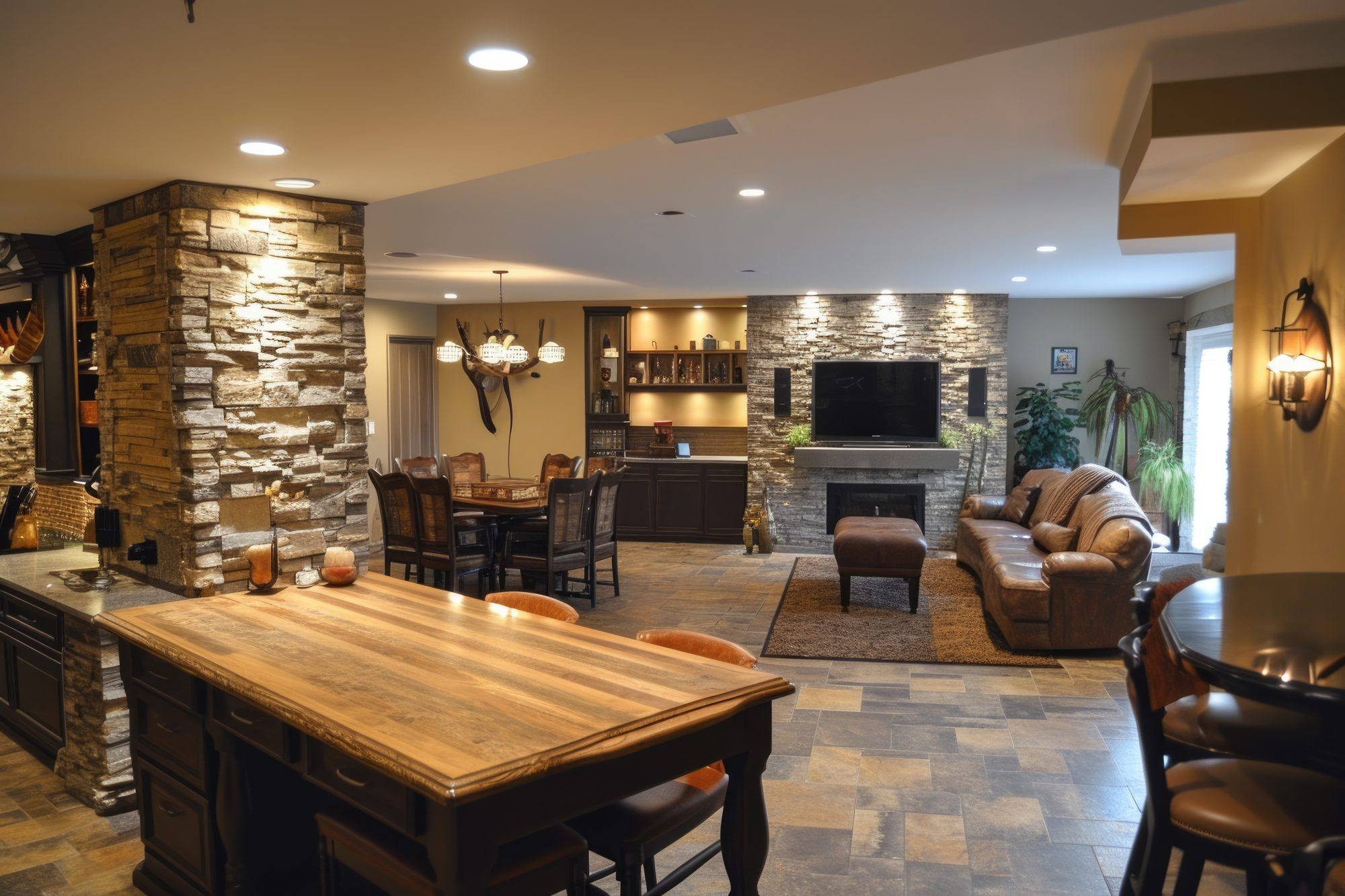
If your basement is unfinished and you rarely use it, ask yourself whether it could reasonably become living space. If you plan to finish it, I’d want to know your radon level before you start building. A crawl space you can’t stand up in isn’t living space; you test the level above it. If your home has separate foundation areas, you may need to test more than one location.
- Right: at least 20 inches off the floor, in a room you use
- Not on the floor
- Not on the sump pit
- Not in the air from a vent
- Not by a window or an outside wall
- Not next to a dehumidifier
Closed-house conditions
For a 2- or 3-day test, close all windows and outside doors 12 hours before you start, and keep them closed during the test except for normal coming and going (EPA). You can run your heat or air conditioning as usual, as long as it isn’t pulling outside air into the house. Don’t run a short-term test during a severe storm or very high winds.
Opening the windows for a while to “air the place out” is enough to throw off a short-term test. With passive kits, also make sure they reach the lab within the time the instructions give. I don’t present a test that wasn’t done to protocol as valid. If you’re new to radon, start with where radon comes from and why basements test higher.
Printable checklist
Radon test setup
Where to put the test, closed-house conditions, when to start over and a log for your results. One page, US Letter.
Printable checklist: Radon test setup. Download the one-page PDF at belowthesill.com/checklists/radon-test-setup-checklist.pdf
How long does a radon test take?
Short-term tests run 2 to 90 days, depending on the device; most home kits take 2 to 7 days. Long-term tests run more than 90 days and give you a better idea of your year-round average. Kits then spend a few days at the lab. A professional continuous monitor runs at least 48 hours, and the result can be read as soon as it’s picked up.
DIY kit or professional test?
A kit from a hardware store is cheap and a good starting point. A professional test makes sense when you’re buying or selling a home, when your result is close to a decision point, or when you want hourly readings.
Who can test for you depends on your state. Some states license or certify radon testers themselves: Pennsylvania requires certification from its Department of Environmental Protection, and Ohio requires a license from its Department of Health. Others, like Virginia, require national certification from the National Radon Proficiency Program (NRPP) or the National Radon Safety Board (NRSB). Your state radon program can tell you what’s required, and both national programs have searchable lists of certified pros.
How much does a radon test cost?
Store kits cost about $10 to $40 for short-term tests and $25 to $60 for long-term ones (Angi, September 2026). Professional testing varies more: Angi puts the national range at $145 to $714, with an average of $421, and the Virginia Department of Health lists $100 to $200 as a general reference.
For a simple professional test with a continuous monitor in a single-family home, I’d budget about $150 to $300, depending on your area, how far the professional has to travel and how many spots need testing. In a simple house in Virginia, $185 would be a reasonable price. Ask whether the report and any second test location are included.
Testing when buying or selling a house
In Virginia and Maryland, the buyer usually orders the radon test during the inspection period, as the contract allows. Pennsylvania, Ohio and New Jersey see plenty of sale tests too, but your professional has to meet that state’s requirements, and disclosure laws aren’t the same everywhere. I wouldn’t assume the seller has to order a new test.
For a home sale, I use a state-accepted continuous monitor for at least 48 hours. I keep closed-house conditions and note where the monitor was placed, when it was placed and picked up, its calibration and anything unusual. The hourly readings can show spikes and drops, but a swing alone doesn’t mean someone tampered with the test.
Ohio has one more requirement: if the company that tested your home also does the mitigation, it has to say so clearly in the mitigation contract and explain the benefits of a long-term test and a second opinion. For the test after a system goes in, I look for an independent tester, as the rules allow.
When to retest
- No system and a low result: every 2 to 5 years, and sooner if something changes.
- After big changes: finishing the basement, foundation work, major ventilation changes or starting to use a lower floor.
- After a mitigation system is installed: within 30 days, but not sooner than 24 hours after the fan starts running (EPA). See how radon mitigation systems work.
- With a system in place: at least every two years, and after repairs that could affect it (EPA).
Who wrote this guide
Written by
Licensed contractor in Virginia who specializes in moisture, water, mold and radon.
- Five IICRC certifications, including Building Moisture Inspection and Mold Remediation Specialist
- Virginia contractor license, Residential Building Contractor (RBC) class
- NRPP certified Radon Measurement Professional (2018) and Radon Mitigation Specialist (2020)
- EPA RRP Certified Renovator (lead-safe renovation)
Below the Sill is independent and educational. We don’t provide inspections, engineering or repair services, contractor referrals or estimates.
Share this guide
All 8 guides in Home hazards
Home hazards topic pageA seasonal check, by email
Four emails a year, before each season changes: what to look at in your basement, crawl space and yard, and the guides we’ve published since the last one.
Sources
- U.S. EPA, A Citizen’s Guide to Radon, EPA 402/K-12/002 (opens in a new tab). Checked October 2026.
- U.S. EPA, Consumer’s Guide to Radon Reduction, EPA 402/K-10/005 (opens in a new tab). Checked October 2026.
- U.S. EPA, Radon Resources for the Real Estate Community (opens in a new tab) (updated Sept. 16, 2026). Checked October 2026.
- Virginia Department of Health, Radon Testing and Mitigation (opens in a new tab) (updated Dec. 17, 2025). Checked October 2026.
- Code of Virginia § 32.1-229.01 (opens in a new tab). Checked October 2026.
- Pennsylvania DEP, Radon Certification (opens in a new tab). Checked October 2026.
- Ohio Administrative Code, Chapter 3701-69 (opens in a new tab). Checked October 2026.
- Angi, How Much Does Radon Testing Cost? (opens in a new tab) (updated Sept. 23, 2026). Checked October 2026.
Field cases come from Robert Stulpt’s own radon projects, and each one names the state where it happened. Robert is certified by the National Radon Proficiency Program (NRPP) in radon measurement and mitigation. State rules on who can test change; check with your state radon program.