

Home hazardsGuide 1 of 8
Radon in your basement: where it comes from and what to do
From Below the Sill · belowthesill.com/radon/
Short answer
Radon in your basement almost always comes from the ground under your home. Uranium in the soil and rock creates the gas, and it seeps in through cracks, gaps around pipes and open sump pits. The basement is usually where the levels are highest. You can’t see it or smell it, so the only way to know your level is to test.
On this page
What is radon?
Radon is a radioactive gas that forms when uranium breaks down in soil, rock and water. Outside, the gas spreads into the air and stays at low levels. Inside your home it can get trapped and build up.
Radon has no smell and no color, and you won’t feel any symptoms from it. It’s heavier than air, but that isn’t the main reason basements test higher. The bigger reason is that the basement sits right against the ground the gas comes from.
Where does radon come from and how does it get into homes?
Most of the time, the source is the ground around and under your home. According to the EPA, radon usually gets in through cracks and other openings in the foundation. Only a small number of homes get it from well water or building materials.
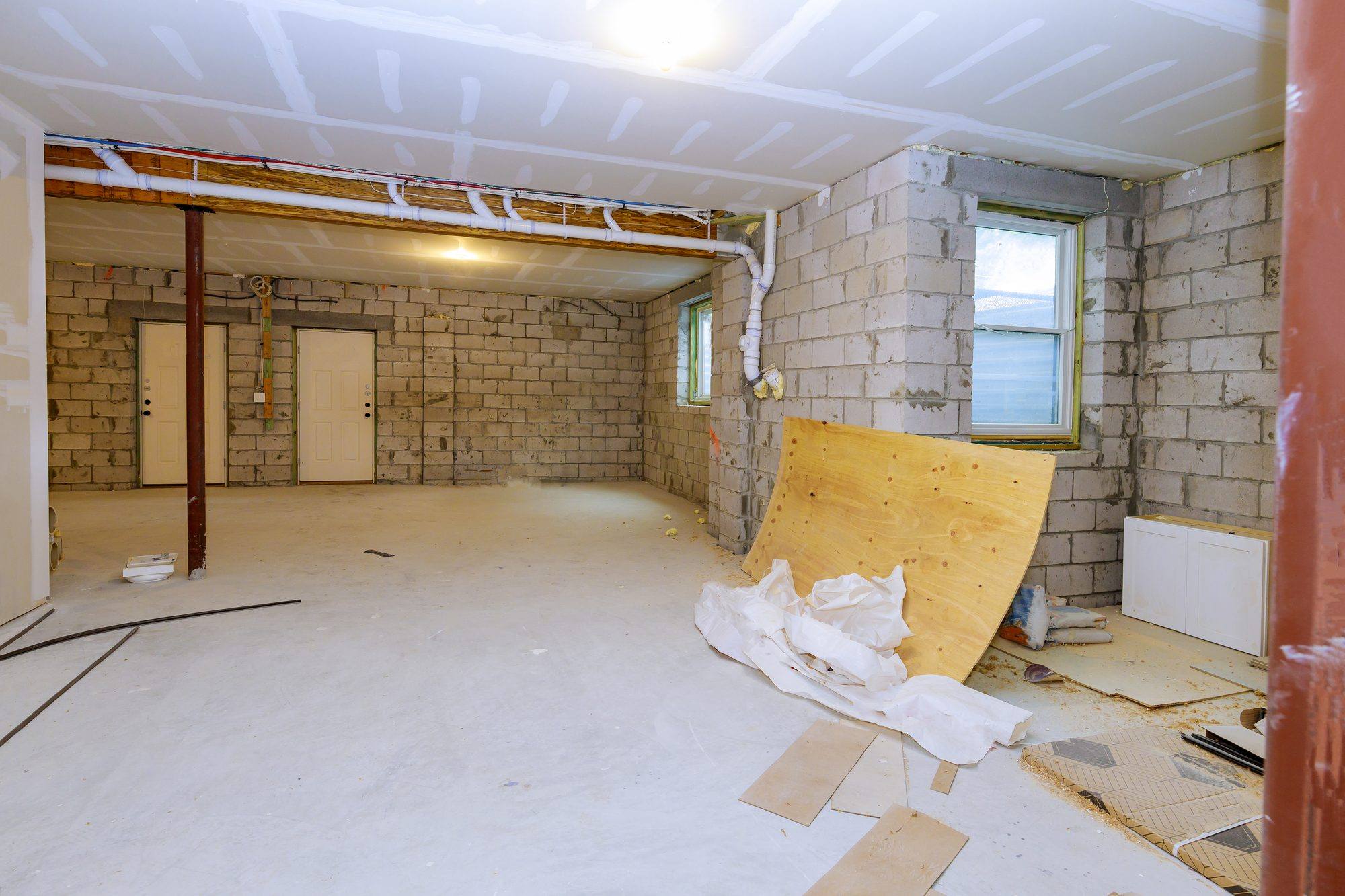
When I look at a basement with a slab, I start where the floor meets the walls, where plumbing and electrical lines come in, and the sump pit. I’ve found a lot of sump pits with lids that keep debris out but aren’t airtight. In hollow block walls, I look at the joints and the hollow cores of the blocks. A crawl space with bare dirt is a big path for radon too.
Often you can’t tell where the radon is coming in just by looking at a crack. It depends on air pressure and on how easily air moves through the dirt and gravel under your home.
- The joint between the floor and the wall
- Cracks in the slab
- Gaps around pipes and wires through the wall
- A sump pit with a lid that isn’t sealed
- The hollow cores of a block wall
Why radon in a basement is usually higher
Your house works a little like a chimney. Warm air escapes through the upper floors and the attic, and that creates a slight vacuum that pulls air in at the bottom, some of it from the soil through gaps in the foundation. The basement is closest to the ground, so it’s affected the most.
That’s also why radon levels move with the weather. The Virginia Department of Health says levels usually peak in the coldest months, when the heat is on and the windows stay shut. That isn’t always the case, though: wind, rain and how you live in your home can change the numbers.
Radon in crawl spaces
In a crawl space with a dirt floor, radon rises straight into the crawl space, and some of that air makes its way into your living space. Encapsulating the crawl space can cut down how much air moves from the dirt into the crawl space, but it doesn’t solve a radon problem. You still need to test. A dehumidifier won’t lower your radon level either: it lowers humidity, not radon.
If your crawl space already has a liner, it can sometimes be used for a radon system. I check that it’s thick enough, that the overlaps are sealed, that there are no holes, that it’s sealed to the walls and piers, and whether air can be pulled from under it. If the liner has a lot of tears or isn’t sealed, parts of it will need to be replaced. There’s more in our guides to crawl space encapsulation and radon mitigation.
What radon does to your health
According to the EPA and the U.S. Surgeon General, radon causes more than 21,000 lung cancer deaths a year in the United States, which makes it the second leading cause of lung cancer after smoking (CDC). It doesn’t make you sick right away. The risk comes from breathing high levels for years.
Radon doesn’t cause early symptoms. If you smoke or have smoked, your risk is much higher: at the same radon level, the EPA’s risk estimates for smokers are many times greater than for people who never smoked. The CDC also says there is no known safe level of radon, so lowering your level always lowers your risk.
How common is radon?
The EPA estimates that nearly 1 in 15 U.S. homes has a radon level of 4 pCi/L or higher, its action level. Some states see much more. Pennsylvania’s Department of Environmental Protection says about 40% of homes tested in the state come in above 4 pCi/L. Keep in mind that this counts only the homes that were tested.
The EPA has a map that shows which counties are more likely to have high radon levels, but the EPA says the map shouldn’t be used to decide whether to test your home. I’ve seen high levels in brand-new homes and freshly finished basements, and low levels in older homes. In Pennsylvania, knowing your county’s average won’t tell you what your house has. In New Jersey, levels can change from one town to the next and from house to house. And in Tennessee or North Carolina, a house on a slab with no basement can still have radon.
I often hear that the house next door tested at 1.5 pCi/L. That’s fine, but they didn’t test your foundation.
What to do: test, read the result, fix if needed
- Test. Use a short-term kit or hire a certified professional, and follow the placement and closed-house rules. See how to test for radon.
- Read the result. The EPA recommends fixing a home at 4 pCi/L or higher and considering a fix between 2 and 4. See the radon levels chart.
- Fix it if needed. Most homes use a fan-driven suction system under the slab or under a crawl space membrane. See how radon mitigation works and what it costs.
If you’re going to finish your basement, test first. It’s much easier to run a radon pipe before the walls go up.
Radon in well water
If you have a private well, radon can also come in with your water. When you shower or run the tap, it’s released into the air. The EPA recommends testing your water if your air test shows a high level and you use well water. If you’re on a public supply that uses surface water, radon in your water usually isn’t a concern.
Who wrote this guide
Written by
Licensed contractor in Virginia who specializes in moisture, water, mold and radon.
- Five IICRC certifications, including Building Moisture Inspection and Mold Remediation Specialist
- Virginia contractor license, Residential Building Contractor (RBC) class
- NRPP certified Radon Measurement Professional (2018) and Radon Mitigation Specialist (2020)
- EPA RRP Certified Renovator (lead-safe renovation)
Below the Sill is independent and educational. We don’t provide inspections, engineering or repair services, contractor referrals or estimates.
Share this guide
In this section
How to test for radon: short-term vs. long-term tests
How to test for radon at home: which test to use, where to place it, how long it takes, what it costs and the mistakes that ruin a result.
Read the guideRadon levels chart: what your test result means
A radon level chart in pCi/L and Bq/m³ with EPA action levels: what counts as acceptable, when to retest and when to fix your home.
Read the guideRadon mitigation systems: how they work and what a good install looks like
How radon mitigation works in basements, slabs and crawl spaces, what a good radon mitigation system includes, and when DIY falls short.
Read the guideRadon mitigation cost: what a system costs to install and run
Radon mitigation cost in 2026: typical system prices, what raises the price, running costs for the fan, and how to compare quotes.
Read the guideRadon fan replacement and system checks: is your system still working?
Radon fan replacement: how to read the manometer, signs the fan is failing, replacement cost and the regular checks your system needs.
Read the guide
A seasonal check, by email
Four emails a year, before each season changes: what to look at in your basement, crawl space and yard, and the guides we’ve published since the last one.
Sources
- U.S. EPA, How does radon get into your home? (opens in a new tab) (updated Feb. 18, 2026). Checked October 2026.
- U.S. EPA, A Citizen’s Guide to Radon, EPA 402/K-12/002 (opens in a new tab). Checked October 2026.
- U.S. EPA, Map of Radon Zones (opens in a new tab) (updated Sept. 16, 2026). Checked October 2026.
- CDC, About Radon (opens in a new tab) (reviewed June 18, 2026). Checked October 2026.
- Pennsylvania DEP, Radon in the Home (opens in a new tab). Checked October 2026.
- Virginia Department of Health, Radon Testing and Mitigation (opens in a new tab) (updated Dec. 17, 2025). Checked October 2026.
Field cases come from Robert Stulpt’s own radon projects, and each one names the state where it happened. Robert is certified by the National Radon Proficiency Program (NRPP) in radon measurement and mitigation.