
White mold, efflorescence or mildew? How to tell what’s on your basement wall
Short answer
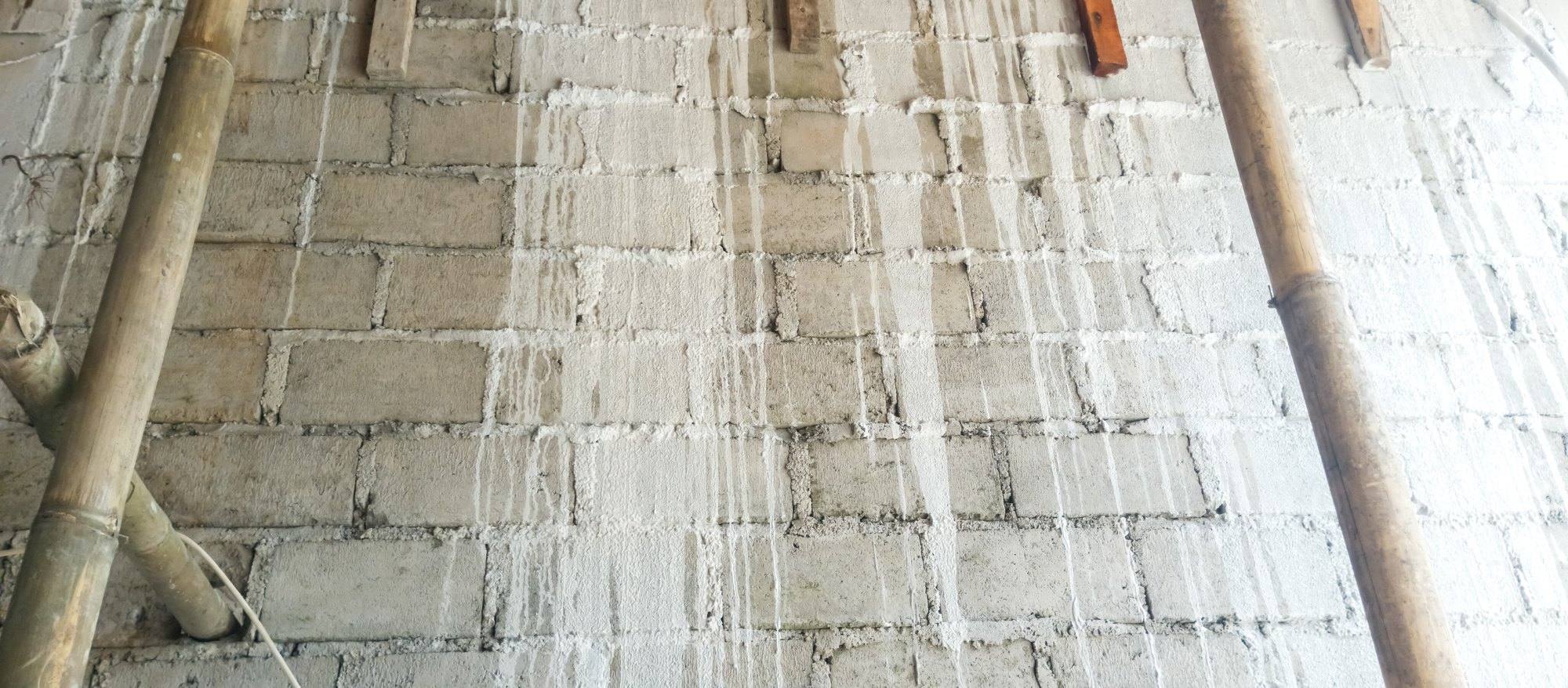
If it’s on bare concrete, block or brick and it looks like white powder or crystals, it’s most likely efflorescence: salt left behind by water moving through the masonry and evaporating. If it’s on wood, drywall, cardboard or insulation, it’s more likely white mold. “Mildew” is usually just what people call mold on a surface, and I treat it as mold. All three come from moisture, so the next step is the same: find out where the water is coming from.
On this page
Efflorescence, white mold and mildew compared
| Efflorescence | White mold | “Mildew” | |
|---|---|---|---|
| What it is | Mineral salts left by water | A fungus growing on the material | An everyday word for mold on a surface |
| Where you find it | Concrete, block, brick, mortar | Wood, drywall, paper, cardboard, insulation; on masonry, in the dust, dirt or paint on it | Same places as mold |
| What it looks like | Crystalline, powdery or small deposits | Often threadlike or fuzzy, but not always | Same as mold |
| What it tells you | Water has moved through the wall, now or in the past | The material stayed damp long enough to grow mold | Same as mold |
| What to do | Find the moisture; brush the deposits off | Fix the moisture; clean or remove (mold cleanup) | Same as mold |
How to tell efflorescence from white mold
I check in this order:
- The surface. On concrete, brick or block, I think efflorescence first. On wood, drywall, cardboard or insulation, I suspect something biological.
- A flashlight held to the side. Light across the surface shows texture. Salts tend to look crystalline, like powder or small deposits. Mold can look more threadlike, though not always.
- A few drops of water. Some salts dissolve easily in water. Test a small sample you’ve scraped off and set apart. It’s also the first test NDSU Extension suggests.
- A few drops of white vinegar, if water doesn’t dissolve it. On a small spot, vinegar can help identify carbonate deposits, which react with the acid even though they don’t dissolve easily in water. NDSU Extension suggests the same second step. It makes sense on bare, uncoated masonry; I wouldn’t use it on paint, wood or delicate materials.
Treat these as a rough check, not a diagnosis. A spot that disappears when you wet it doesn’t prove it isn’t mold. And if it doesn’t dissolve in water or vinegar, that doesn’t prove it is mold either. It only means those tests didn’t identify what it is.
What I wouldn’t do: rub it between your fingers or get close to smell it. I also wouldn’t mix vinegar with cleaning products, especially bleach. And I wouldn’t trust the usual internet test that says mold always feels a certain way.
Sometimes you can’t tell by looking. Then you have to look at the material it’s on, the pattern and where the moisture is coming from.
Can white mold grow on concrete?
Mold can grow on a concrete surface, but it’s usually growing on something sitting on the concrete: dust, dirt, paint, leftover adhesive or paper. Clean concrete isn’t good food for mold.
That’s why, with a white substance on bare block, I lean toward mineral deposits. But I don’t jump to that conclusion without looking.
Efflorescence on basement walls: what it means
Efflorescence is salt left behind when water moves through masonry and evaporates. It isn’t mold. The National Park Service describes it as a whitish powder on the surface of masonry, and notes that salts that stay inside the masonry can make the surface crumble and flake away. That’s called spalling.
It can come from water moving through the wall now, or it can be an old deposit. If you remove it and it comes back, the moisture is still moving through the wall. The first thing I look at is why moisture is getting to that wall. Water in the basement explains the ways it gets in; in the case below, it was a downspout.
I also look at the mortar and the block. If there’s spalling or serious damage to the masonry, I don’t treat it as a cosmetic issue. Foundation cracks explains what to watch for.
How to remove efflorescence
Most of the time a suitable brush will take it off, and depending on the surface, a gentle cleaning. I wouldn’t start with acids. The Park Service warns that acid cleaners can etch some types of masonry and that strong acids can eat away at lime mortar.
Mildew vs mold
When a homeowner says mildew, they usually mean mold growing on the surface of something. I don’t treat it as a separate technical category. If fungi are growing on a building material, I consider it mold. Whatever the homeowner calls it, I don’t change the work because of the word.
White fuzzy stuff on joists or new lumber
Often it’s surface mold. But I’ve also found dust, residue from wood treatments and crystal deposits that can be mistaken for it.
With new wood, I check whether it got wet while it was stored or during construction. I measure the moisture, check whether the wood is solid and look at whether the substance looks like growth or like residue on the surface. I wouldn’t replace joists just because they’re white. If it’s surface mold, fix the moisture and clean it. If the wood has lost strength, it’s no longer just a cleaning job; see mold on wood.
Sources
- NDSU Extension, Is it Mold or isn’t it? (opens in a new tab) (Ken Hellevang; published October 10, 2024, updated March 10, 2025): salt deposits that look like mold; the water and vinegar tests.
- National Park Service, Preservation Brief 1: Assessing Cleaning and Water-Repellent Treatments for Historic Masonry Buildings (opens in a new tab) (Robert C. Mack and Anne Grimmer, 2000): efflorescence, subflorescence and spalling; acid cleaners.
Robert Stulpt holds the IICRC Applied Microbial Remediation Technician (AMRT) and Mold Remediation Specialist (MRS) certifications and owns a remediation company in Virginia. Below the Sill doesn’t send him customers.