

Insurance & claimsGuide 1 of 5
Does homeowners insurance cover a flooded basement?
From Below the Sill · belowthesill.com/insurance/flooded-basement/
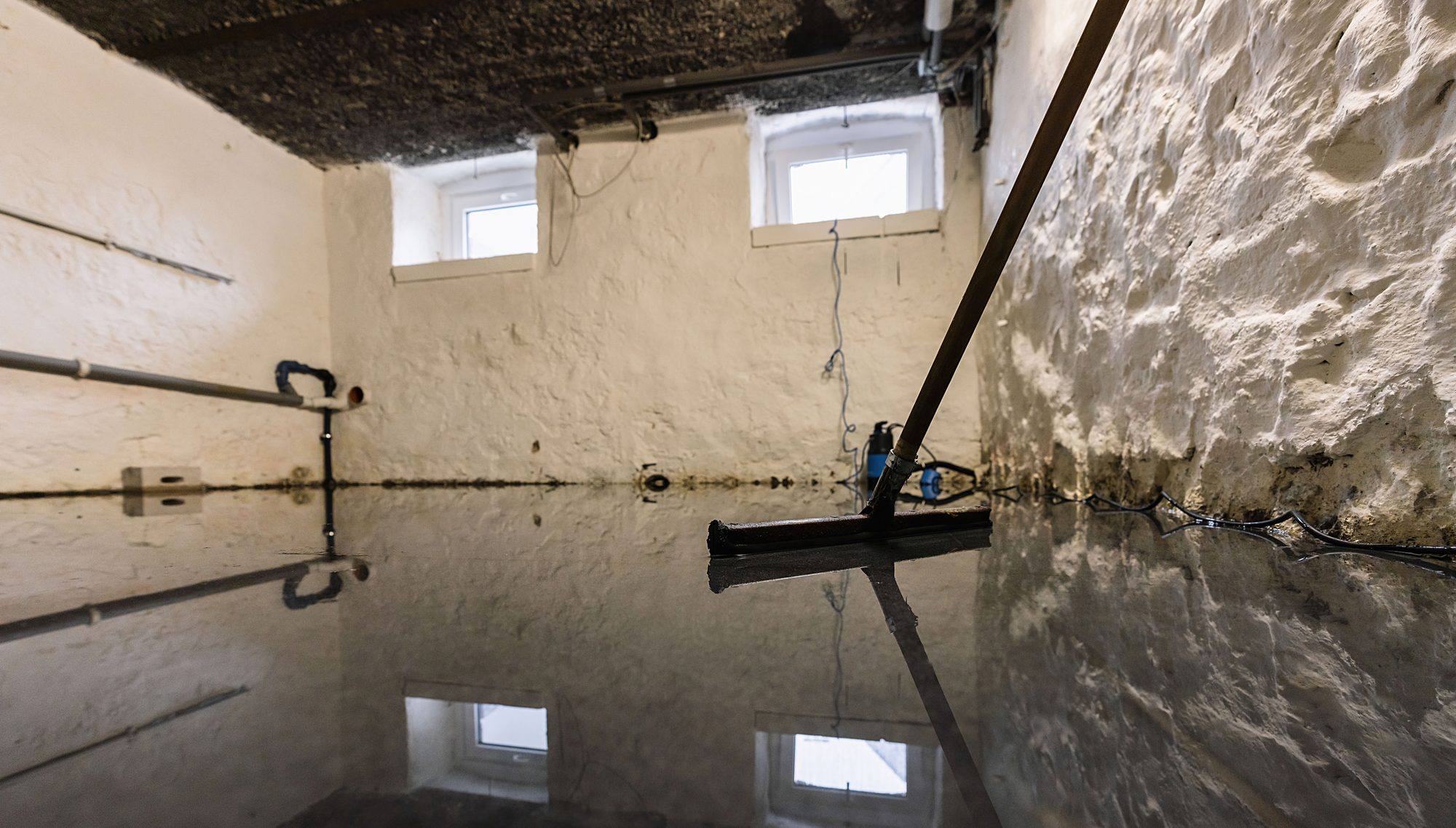
Short answer
It depends almost entirely on where the water came from. Water that escapes suddenly from your plumbing or an appliance is usually covered. Water that backs up through a drain needs a water backup endorsement. Water that seeps in from the ground, or comes from flooding outside, is usually excluded from a standard homeowners policy; flooding needs a separate flood policy.
On this page
That’s why you want to know where the water came from, and why it’s worth taking pictures before anything gets cleaned up.
Coverage by water source
| Where the water came from | What it usually looks like | Which coverage may answer |
|---|---|---|
| Sudden and accidental discharge from plumbing | Water traced to a pipe or fitting; often clean water | Standard homeowners policy, if sudden and accidental |
| Appliance failure (washer, water heater) | Water traced to a hose, connection or tank | Standard homeowners policy, if sudden and accidental |
| Sewer or drain backup | Water coming out of floor drains or toilets; sediment and odor near the drain | Water backup endorsement, if you have one |
| Sump pump overflow or failure | Pit overflowing; water spreading from the sump | Water backup or sump overflow endorsement, depending on its wording |
| Groundwater seepage | Water at the floor-wall joint or through wall cracks | Usually excluded from homeowners; not covered by flood insurance unless directly caused by a flood that meets the NFIP definition |
| Surface water or flooding | Water pooling outside and entering at several points | Flood policy (NFIP or private), if the event meets its definition of flood |
These are general patterns, not a coverage decision. Your policy wording and your state decide the outcome, so confirm with your insurer or agent. If the answer depends on a backup endorsement, our guide to water backup and sump overflow coverage explains what it covers and how to judge its limit.
How to tell where the water came from
On a job, I want to see three things before anyone pulls up flooring: how deep the water got, what it left behind, and the order things happened in.
- Backup: water rises out of floor drains, toilets or tub drains. You often find sediment or debris around the drain and a sewage odor.
- Seepage: water shows up along the joint between the floor and the wall, or along cracks in the foundation wall. It tends to appear during or after long rain and to come back.
- Surface flooding: water collects outside first and then enters at several points at once, such as window wells, doors and low openings.
Odor, sediment and water lines all point toward a cause, but none of them proves it on its own. The adjuster will weigh everything together, so take pictures of each clue before cleanup removes it.
Window wells: a common gray area
If surface water pools and comes in through a basement window or a crack in the wall, a standard policy usually excludes it. A window well that overflows in a storm doesn’t, on its own, mean you had a flood under the NFIP definition. What decides that is how widespread the water was and what caused it. If a covered peril broke the window first, wind for example, you may have coverage, depending on the policy wording.
Flood insurance in a basement
If you did have a true flood, the flood policy is the one that pays, and its basement coverage is narrower than most owners expect. FEMA’s National Flood Insurance Program (NFIP) considers any area with a floor below ground level on all sides a basement, and under current NFIP rules it only pays there for items the policy lists.
- Building coverage can include installed equipment such as furnaces, water heaters, central air conditioners and sump pumps, plus cleanup.
- Contents coverage, bought separately, can include washers, dryers and food freezers, as long as they’re connected to power.
- Not covered: finished walls and flooring, built-ins, furniture, electronics and anything simply stored down there. The policy also doesn’t pay to remove items it doesn’t cover, such as basement carpet, even when removing them is part of the cleanup.
You won’t be paid twice for the same damage by a water backup endorsement and a flood policy. If a backup happens on its own, the endorsement may pay. If the backup is a direct result of a flood that meets the NFIP definition, the flood policy may pay instead. Depending on the cause and the policy terms, a finished basement can still be left with substantial costs that neither one covers. Some private flood policies cover more.
The first 48 hours
This is the checklist I give clients. You don’t have to wait for the adjuster before protecting your home; most policies expect you to prevent further damage.
- Stay out if it isn’t safe. Don’t walk into water if there’s any electrical, structural or sewage risk. Shut off power to the basement only if you can reach the panel without walking through water. If you can’t, stay out and call the utility or an electrician.
- Stop the water when it’s safe to do so: close the main valve, shut off the appliance, or stop using drains if they’re backing up.
- Photograph before you move anything. Take wide shots of each wall and close-ups of the source, the water line and any sediment, with something in the frame for scale.
- Report the loss to your insurer as soon as you can. Policies typically ask for prompt notice rather than a fixed number of hours.
- Get the water out and start drying. Keep a record of what was done, which equipment was used, for how many days, and every invoice.
- Keep what failed. If a hose, fitting or pipe section broke, keep it. Ask the plumber for a written note on the cause.
Drying within 24 to 48 hours is a technical goal to keep mold from growing, not a deadline for your claim. Report the loss promptly, document everything, and keep the damage from spreading.
Once the loss is reported, how a water damage claim moves explains what happens next, what to keep in your claim file and how long the insurer has to answer.
For the cleanup itself, see what to do in a flooded basement. If water keeps coming in through the walls, see basement waterproofing; if a sump pump failed, see sump pump backup options.
Insurance information reviewed for accuracy by Nathaniel Calderbrook. This is general information, not a coverage decision: your policy wording and your state decide what is covered.
Who wrote this guide
Written by
Licensed contractor in Virginia who specializes in moisture, water, mold and radon.
- Five IICRC certifications, including Building Moisture Inspection and Mold Remediation Specialist
- Virginia contractor license, Residential Building Contractor (RBC) class
- NRPP certified Radon Measurement Professional (2018) and Radon Mitigation Specialist (2020)
- EPA RRP Certified Renovator (lead-safe renovation)
Insurance review
Nathaniel Calderbrook, Home Insurance & Claims Contributor
Reviews the insurance information in this guide for accuracy.
- Licensed Property & Casualty Insurance Producer in Virginia, Maryland and Pennsylvania
- 17 years in homeowners insurance, with a focus on water damage and structural claims
- Independent agent: earns commissions from insurers. We don’t recommend insurers or send readers to any agent
Below the Sill is independent and educational. We don’t provide inspections, engineering or repair services, contractor referrals or estimates.
Share this guide
All 5 guides in Insurance & claims
Insurance & claims topic page- 01Flooded basement insurance (you’re here)
- 02Mold and insurance
- 03Water backup coverage
- 04Foundation damage and insurance
- 05Water damage claims
A seasonal check, by email
Four emails a year, before each season changes: what to look at in your basement, crawl space and yard, and the guides we’ve published since the last one.
Sources
- Federal Emergency Management Agency, What Does Flood Insurance Cover in a Basement? (opens in a new tab). Checked October 2026.
Field cases come from Robert Stulpt’s own work; each names only the state to keep the owners anonymous. Below the Sill doesn’t sell insurance or recommend insurers. Coverage depends on your policy wording and your state.