

Insurance & claimsGuide 5 of 5
Water damage insurance claims: what happens and when
From Below the Sill · belowthesill.com/insurance/water-damage-claim/
Short answer
Three things decide most water damage claims: what caused the water, what your policy says about that cause, and what you can document. File when the full cost is clearly above your deductible and the cause is covered. Report promptly, keep the damage from spreading, and make sure readings, drying and removals are recorded from day one, because the adjuster decides mostly from that file.
On this page
The first two are settled before you pick up the phone. The third is mostly in your hands, and it’s where most of the friction I see on jobs comes from.
This guide follows a claim as it moves between you, the restoration company and the adjuster. If you’re not sure the damage is covered at all, start with what insurance covers in a flooded basement or how mold claims are decided.
Should you file at all?
File when the full cost of the damage is clearly above your deductible and the cause is one your policy covers. When the numbers are close, price the whole job before you decide, not just the part you can see.
What you can see is rarely the whole bill. Wet drywall usually means wet insulation behind it. A damp subfloor may not show until the flooring comes up. Get a written estimate that covers opening up the affected area, drying, removal and rebuilding.
A close call, worked through. Say the estimate comes to $1,800 and your deductible is $1,500. The most the insurer would pay is $300. That’s not much, but it isn’t the whole decision. If moisture turns up behind the wall later, the real cost may be well above $1,800. Your policy also expects you to report losses promptly and to keep the damage from spreading. Read those duties, or ask your agent what they mean for you, before you decide not to report.
Will a claim affect your renewal?
It can. Claims history is one of the things insurers look at when they price or renew a policy. Virginia, Maryland and Pennsylvania each limit how insurers can use some claims to drop a policy, but none of these rules freezes your premium. A cancellation, a nonrenewal and a premium increase are three different things, and the rules below are mostly about the first two.
| State | What the rule says | Source |
|---|---|---|
| Virginia | An insurer may not refuse to renew an owner-occupied home solely because of a claim that resulted mainly from natural causes, or because of claims older than 60 months. A nonrenewal needs at least 30 days’ notice, and you can ask the Commissioner of Insurance to review it within 10 days of receiving the notice. | Va. Code § 38.2-2114 (opens in a new tab) |
| Maryland | A weather-related claim (rain, snow, hail, lightning, freezing and similar causes) generally can’t be combined with other factors to cancel or refuse to renew unless there were three or more weather-related claims in the past 3 years. | COMAR 31.15.10.02 (opens in a new tab) |
| Pennsylvania | Once a homeowners policy has been in force for 60 days, state law limits the reasons for canceling or not renewing it. Claims history alone isn’t one of the listed reasons, although a substantial increase in risk can be. The insurer must give at least 30 days’ written notice with its specific reasons, and you can ask the Insurance Commissioner to review it within 10 days. These protections don’t prevent premium increases. | 40 P.S. § 1171.5(a)(9) (opens in a new tab) |
Asking isn’t the same as filing. A question to your agent about what your policy covers is different from reporting a loss. In Virginia, an inquiry that doesn’t report a loss isn’t a claim, and the insurer may not report it as one to a loss history database (§ 38.2-2114 (opens in a new tab)). In other states, ask your agent how an inquiry is recorded before you describe a specific loss.
How a claim moves
A water claim runs on two tracks at once: the restoration company dries the house while the insurer opens the file. The insurer’s decision waits for your completed proof of loss, so that paperwork sets the pace more than anything else.
Payments may arrive in several installments rather than one check. Depending on the policy and the claim, the insurer may make a first payment for covered damage and more as repairs progress or replacement costs are documented. If you have a mortgage, your lender may also be named on the check.
The insurer’s deadlines in VA, MD and PA
Your state sets deadlines for the insurer too. In all three states, the insurer has to acknowledge your claim within two to three weeks. Once it has your completed proof of loss or claim forms, it has to decide within two to three weeks, or tell you in writing why it needs more time. Other states have similar rules with different numbers, and your state insurance department publishes them.
| Step | Virginia | Maryland | Pennsylvania |
|---|---|---|---|
| Acknowledge your claim | 15 calendar days | 15 working days | 10 working days |
| Send claim forms and instructions | Promptly (doing it within 15 calendar days also counts as the acknowledgment) | Sending them counts as the acknowledgment | 10 working days |
| Investigation running long | Written notice of the reason at 45 calendar days, then every 45 days | Written notice of the reason at 45 days, then every 45 days | Investigation due within 30 days; if it can’t be done, written notice at 30 days, then every 45 days |
| Accept or deny | 15 calendar days after a completed proof of loss, or a written notice of why more time is needed | 15 working days after completed claim forms, unless the policy sets another limit or the investigation rule applies | 15 working days after completed proofs of loss, or a written notice of why more time is needed |
| If denied | In writing, with a reasonable written explanation | A reasonable explanation of the basis, provided promptly | In writing, citing the policy provision, condition or exclusion |
Sources: Virginia 14VAC5-400-50, -60 and -70 (opens in a new tab); Maryland COMAR 31.15.07.03 (opens in a new tab) and 31.15.07.04 (opens in a new tab); Pennsylvania 31 Pa. Code § 146.5 (opens in a new tab), § 146.6 (opens in a new tab) and § 146.7 (opens in a new tab).
Keep two things in mind. The decision clock usually starts when the insurer has a completed proof of loss or claim form, not when you first call. And these rules set how the insurer must handle claims: a missed deadline doesn’t by itself mean the claim has to be paid. If your insurer goes quiet past these limits, a written follow-up that cites the date of your claim is a reasonable first step. A complaint to your state regulator is the next one.
What the restoration company sends the insurer
On a water job, the adjuster decides mostly from paper: what we recorded, when, and how it ties to the cause. This is what I put in the file, and what you should expect from whoever dries your basement.
| What | What it shows the adjuster |
|---|---|
| Photos before, during and after the work | How far the water reached on day one, what was removed and why, and the finished result |
| A plan of the affected areas | Where the water went, room by room, and where readings were taken |
| Dated moisture readings at fixed points | That materials were wet and that they dried over time; readings are retaken at the same spots each visit |
| Temperature and relative humidity, plus the drying log | That drying conditions were monitored, not guessed |
| Equipment and days in use | What the drying line items on the bill are based on |
| Materials removed | Which drywall, insulation or flooring came out, and why it couldn’t be saved |
| An itemized estimate and the invoices | The cost, line by line, instead of a single total |
| The plumber’s report | The cause, in writing, from the person who found it |
Ask for copies of everything the company sends your insurer. If something failed, such as a supply hose, a fitting or a pipe section, keep it until the claim is closed.
Your own photos still matter, especially the ones from before anything is moved: wide shots of each wall, close-ups of the source and the water line, and something in the frame for scale. The first 48 hours covers that step.
Where claims stall
Most of the reduced or delayed claims I see get stuck on one of four questions. Was the leak sudden? How much had to come out? What should it cost? Can you show it? None of them is unusual, and the fix for each is mostly paperwork.
| Sticking point | What the adjuster is weighing | What helps |
|---|---|---|
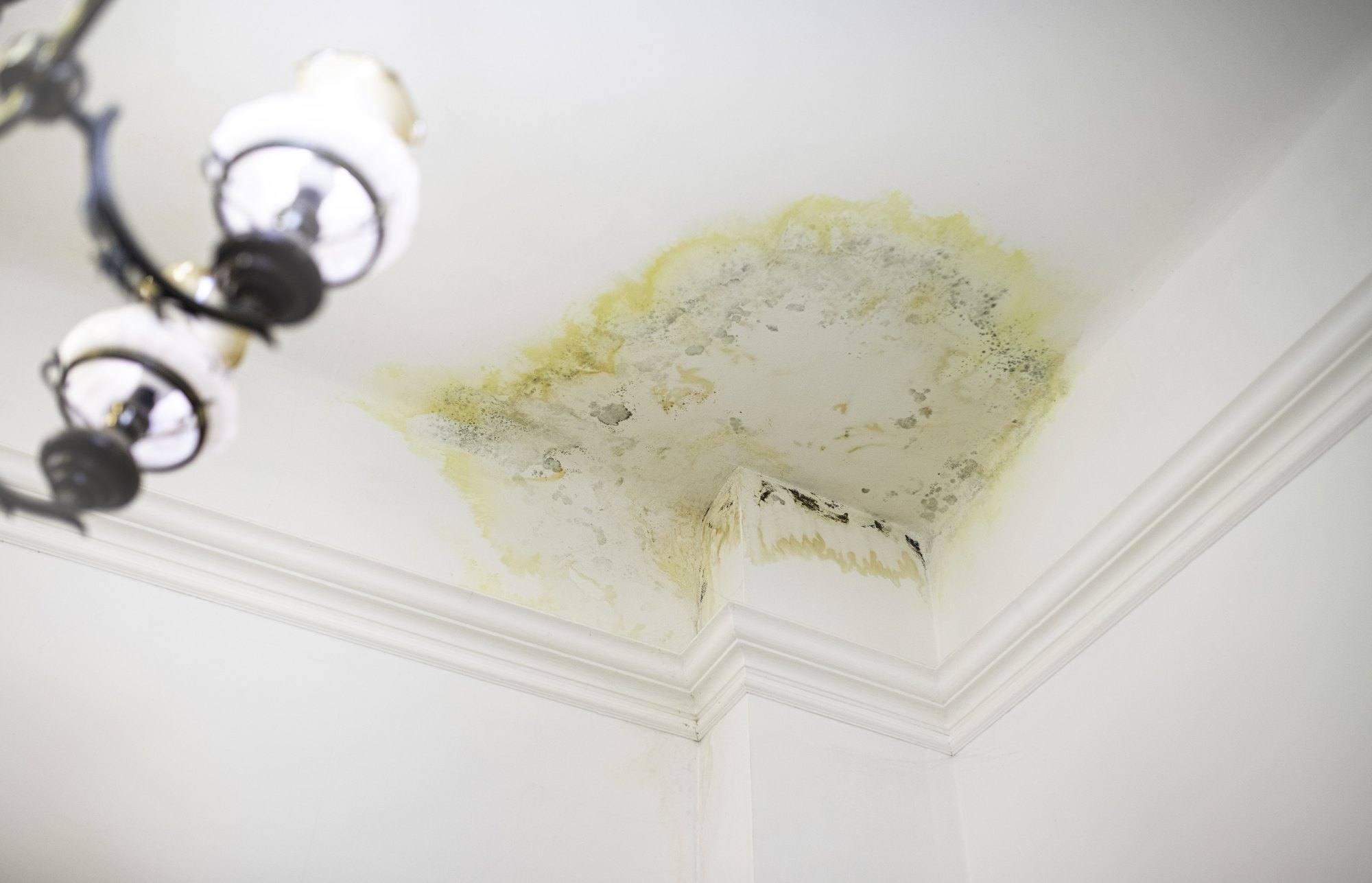
| Sudden or gradual | Rot, drywall that crumbles, corrosion, old stains layered under new ones, efflorescence and earlier patch repairs all point to water that has been there a while. Neither the color nor the size of mold dates it reliably; the adjuster looks at the evidence together. | The plumber’s written cause, the failed part, and photos taken before cleanup |
| Scope | Whether materials had to be removed and replaced, or could have been dried and kept | Moisture readings at fixed points over several days, and photos of what was removed |
| Price | Whether the estimate matches what the insurer considers a fair cost for that work | An itemized estimate, so the two sides can compare line by line |
| Documentation | Gaps in dates, readings or invoices | A file kept from day one: readings, drying logs, equipment, invoices |
A lower number from the insurer isn’t proof that it’s acting in bad faith. Estimates for the same job often differ, and the usual way forward is to go through them line by line.
Timing is the other trap. Most policies ask for notice “promptly” or “as soon as practicable,” not within a fixed number of hours. The 24 to 48 hours you may hear about is a drying target to limit mold, not a filing deadline. Report as soon as you reasonably can and keep the damage from spreading.
If you disagree with the decision
Start by getting the insurer’s reasons in writing, then work up from the cheapest step. Many disagreements are about the amount rather than whether the loss is covered, and an amount dispute has more ways to be settled.
- Ask for the basis in writing. In all three states the insurer must explain a denial, and in Virginia and Pennsylvania it must be in writing. In Pennsylvania the denial must point to the policy provision it relies on.
- Answer it with documents. Send the itemized estimate, the moisture readings, the drying log and the plumber’s report, and ask the adjuster to go through the differences line by line.
- Check for an appraisal clause. Many homeowners policies include an appraisal clause for disputes over the amount of a loss. Each side typically appoints an appraiser, and an umpire resolves what they can’t agree on. Appraisal generally decides the amount of the loss, not whether the policy covers it. Check your policy for the procedure, the costs and any limits.
- Consider a public adjuster on large, complex losses (see below).
- File a complaint with your state regulator if the insurer misses its deadlines or won’t explain its decision. It’s free.
- Talk to an attorney when a large claim is denied outright or the dispute is about coverage itself.
When a public adjuster makes sense
A public adjuster works for you, not the insurer, and is usually paid a percentage of the settlement. In Nathaniel Calderbrook’s experience, they can add real value on complex losses: disputes over scope, several trades involved and a lot of documentation. On small losses, their fee can take a large share of what you recover. And no public adjuster can turn an exclusion into coverage.
Public adjusters must be licensed in the state where they work. Before you sign, check the license with your state regulator and read the contract for these terms:
| Term | Virginia | Maryland | Pennsylvania |
|---|---|---|---|
| Time to cancel after signing | 3 business days (5 after a catastrophic disaster), in writing | 3 business days, without penalty | Until midnight of the fourth calendar day after signing |
| Fee | Must be stated in the contract and reasonable for the work. Capped at 10% of the settlement only after a catastrophic disaster | Not set by law and negotiable | Stated as a percentage of each payment or as a maximum dollar amount |
| Other rules | No fee on money the insurer paid you before the contract was signed | The full fee can’t come out of the first check, and the check can’t be made out to the public adjuster alone | The full fee can’t come out of the first check |
Sources: Virginia § 38.2-1845.13 (opens in a new tab) and § 38.2-1845.14 (opens in a new tab); Maryland Insurance Administration (opens in a new tab); Pennsylvania 31 Pa. Code § 115.2 (opens in a new tab).
Where to complain
| State | Regulator | How |
|---|---|---|
| Virginia | State Corporation Commission, Bureau of Insurance | (804) 371-9185 or toll-free (877) 310-6560; [email protected] (consumer guide (opens in a new tab)) |
| Maryland | Maryland Insurance Administration | Online, by form or by phone at 1-800-492-6116 (file a complaint (opens in a new tab)) |
| Pennsylvania | Pennsylvania Insurance Department | Online portal or 1-877-881-6388 (file a complaint (opens in a new tab)) |
Maryland also has a specific process for first-party claims you believe the insurer handled without good faith, homeowners claims included. It usually starts with a filing at the Maryland Insurance Administration, which must decide within 90 days (MIA guide (opens in a new tab)).
Claim checklist
Keep this on your phone or print it, and tick each item as it goes into your claim file.
Printable checklist
Water damage claim checklist
Everything to keep in your claim file, from the first photos to the last payment, on one printable page. One page, US Letter.
Printable checklist: Water damage claim checklist. Download the one-page PDF at belowthesill.com/checklists/water-damage-claim-checklist.pdf
Before anything is moved
- Wide photos of each wall and close-ups of the source, the water line and any sediment, with something for scale
- The failed part kept (hose, fitting, pipe section), if there is one
- Date and time you found the water, and what you did first
When you report
- Claim number, adjuster’s name and contact details
- Date you reported, and how (phone, app, email)
- Your policy’s deductible and any water backup or mold limits
During drying and repairs
- A plan of the affected areas with the reading points marked
- Dated moisture readings at the same points each visit
- Temperature, relative humidity and the drying log
- Equipment used and the number of days on site
- List and photos of materials removed
- The plumber’s written report on the cause
- Copies of everything the restoration company sends the insurer
Money
- Itemized estimate (not a single total)
- Every invoice and receipt, including emergency purchases
- Every payment from the insurer, with its date and what it covers
Communication
- A log of every call: date, who you spoke to, what was agreed
- Important requests and answers confirmed in writing
Insurance information reviewed for accuracy by Nathaniel Calderbrook. This is general information, not a coverage decision: your policy wording and your state decide what is covered.
Who wrote this guide
Written by
Licensed contractor in Virginia who specializes in moisture, water, mold and radon.
- Five IICRC certifications, including Building Moisture Inspection and Mold Remediation Specialist
- Virginia contractor license, Residential Building Contractor (RBC) class
- NRPP certified Radon Measurement Professional (2018) and Radon Mitigation Specialist (2020)
- EPA RRP Certified Renovator (lead-safe renovation)
Insurance review
Nathaniel Calderbrook, Home Insurance & Claims Contributor
Reviews the insurance information in this guide for accuracy.
- Licensed Property & Casualty Insurance Producer in Virginia, Maryland and Pennsylvania
- 17 years in homeowners insurance, with a focus on water damage and structural claims
- Independent agent: earns commissions from insurers. We don’t recommend insurers or send readers to any agent
Below the Sill is independent and educational. We don’t provide inspections, engineering or repair services, contractor referrals or estimates.
Share this guide
All 5 guides in Insurance & claims
Insurance & claims topic page- 01Flooded basement insurance
- 02Mold and insurance
- 03Water backup coverage
- 04Foundation damage and insurance
- 05Water damage claims (you’re here)
A seasonal check, by email
Four emails a year, before each season changes: what to look at in your basement, crawl space and yard, and the guides we’ve published since the last one.
Sources
- Virginia Administrative Code, 14VAC5-400, Rules Governing Unfair Claim Settlement Practices (opens in a new tab). Checked October 2026.
- Code of Virginia, § 38.2-2114, cancellation and nonrenewal (opens in a new tab). Checked October 2026.
- Code of Virginia, § 38.2-1845.13, public adjuster contracts (opens in a new tab) and § 38.2-1845.14, fees (opens in a new tab). Checked October 2026.
- Virginia State Corporation Commission, Bureau of Insurance, Homeowners Insurance Consumer’s Guide (opens in a new tab) (2020). Checked October 2026.
- Code of Maryland Regulations, 31.15.07.03, Unfair Claim Settlement Practices (opens in a new tab) and 31.15.07.04, Standards for Prompt Investigation of Claims (opens in a new tab). Checked October 2026.
- Code of Maryland Regulations, 31.15.10.02, Homeowner’s Insurance (opens in a new tab). Checked October 2026.
- Maryland Insurance Administration, Should I Hire a Public Adjuster to Help Settle My Claim? (opens in a new tab), File a Complaint (opens in a new tab) and § 27-1001 guide (opens in a new tab). Checked October 2026.
- Pennsylvania Code, 31 Pa. Code § 146.5 (opens in a new tab), § 146.6 (opens in a new tab) and § 146.7 (opens in a new tab). Checked October 2026.
- Pennsylvania Code, 31 Pa. Code § 115.2, public adjuster contracts (opens in a new tab). Checked October 2026.
- Pennsylvania Unfair Insurance Practices Act, 40 P.S. § 1171.5 (opens in a new tab), and Pennsylvania Insurance Department, notice on cancellations and nonrenewals (opens in a new tab) (May 24, 2024). Checked October 2026.
- Pennsylvania Insurance Department, File a Complaint (opens in a new tab). Checked October 2026.
The example in “Where claims stall” is hypothetical: it shows how documentation affects a claim and isn’t a case from Robert Stulpt’s work. The state rules were checked in October 2026 and can change. Below the Sill doesn’t sell insurance or recommend insurers. Coverage depends on your policy wording and your state.